
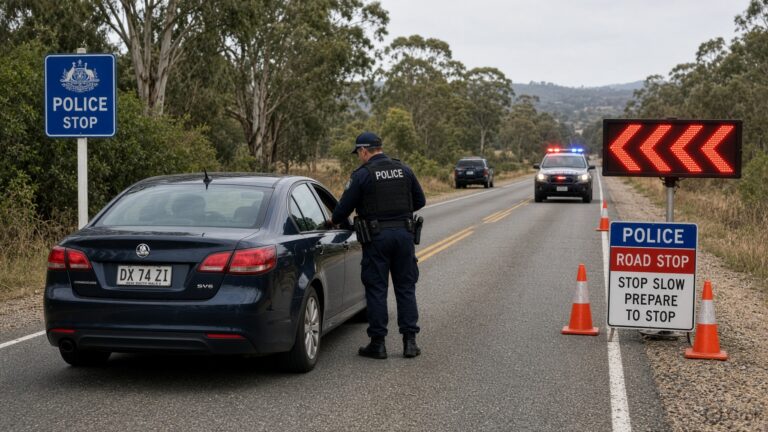
A traffic charge is rarely about the moment you were pulled over. It is about what you do next.
Most people put the notice on the kitchen bench and hope it goes away. A fortnight passes, the date on the paperwork gets closer, and by the time they start ringing around, the decisions that were still open have started closing. The first day is where you have the most options and the least information. Here is the plain-English version of what to do with it.
This guide covers the common Tasmanian traffic matters: speeding and other infringement notices, drink and drug driving charges, unlicensed driving, and matters that arrive as a summons rather than a fine.
Read the notice properly before you do anything else
There is a real difference between an infringement notice and a summons, and people often treat them the same way.
An infringement notice offers you a choice: pay the penalty, or elect to have the matter dealt with by a court. Those are two very different paths, and the choice is usually yours to make, once, within the time stated on the notice.
A summons is different. It tells you that the matter is already heading to court and gives you a date to appear. Ignoring a summons is not a neutral act. It has consequences that are harder to undo than the original charge.
So before anything else: read the document in front of you slowly, and write down what it actually says. What is the charge? What date was it issued? What date do you need to act by? Which court, if any, is named?
If something on the notice does not match what happened, note that too. It may matter later.
Note the deadlines, then put them in your calendar
Every date on that paperwork belongs in your phone within the hour, not in your head.
The date you must respond by, and any court mention or appearance date, are the two that matter most. Set a reminder a week before each of them as well, because once a deadline is missed, the options available to you shrink quickly.
It also helps to write down the date of the alleged offence. Memory fades fast, and a detail that seems obvious today will be genuinely hard to recall in two months.
Decide whether you are contesting or resolving it
Almost every traffic matter comes down to one of two questions:
Do I accept what is alleged, and want to deal with it as efficiently as possible?
Or do I disagree, or accept the facts but believe the consequences should be different?
You do not need to answer that today. But naming it early keeps you from doing things that only make sense on one path. Paying a fine, for example, is a sensible step if you accept the charge and want it behind you. It is a poor step if you intend to contest the matter, because paying is generally treated as an acceptance of it.
If you are genuinely unsure, that is the point at which a short conversation with a lawyer is worth having before you act, not after.
What to gather in the first 24 hours
Early evidence is worth far more than late evidence. Anything that will be useful is easiest to collect now:
- The notice or summons itself, and the envelope it arrived in
- Your licence, and details of your driving history if you have them
- Any photographs, dashcam footage, or written notes about the circumstances
- Names and contact details of anyone who was with you or witnessed the event
- Anything relevant to your personal circumstances, including medical information, work requirements, or caring responsibilities
Put it all in one folder or one photo album on your phone. You are not building a defence today. You are simply stopping information from disappearing.
What not to do
A short list, and it matters:
- Do not ignore it and hope it resolves itself. It does not.
- Do not pay a penalty you intend to contest.
- Do not post about the matter on social media, in group chats, or in reviews.
- Do not contact the other party, if there is one, to sort it out between yourselves.
- Do not assume that needing a lawyer means the situation is catastrophic. Often it means you want the outcome handled properly.
When to call a lawyer, and when you probably do not need to
We will be honest with you here, because it saves everyone time.
If it is a straightforward infringement, you accept it, the penalty is manageable, and there is no risk to your licence or your livelihood, you can usually deal with it yourself.
Call us if any of the following apply:
- Your licence, or your ability to work, is at risk
- You are facing a court appearance or a summons
- The charge is drink driving, drug driving, or driving while suspended or disqualified
- You disagree with what is alleged
- You have prior matters on your record
- You do not understand what you have been charged with
That last one on its own is reason enough to call. Not understanding the paperwork is not a personal failing. It is the norm.
How we work with you
We left the billable hour behind because it was the wrong incentive. You should not be watching a clock while you ask a question, and you should not be surprised by a bill for a conversation you needed to have.
So we work on clear, agreed fees, and we tell you where you stand at each stage. If your matter can be handled without us, we will tell you that too.
If you have been charged in Tasmania and you are not sure what happens next, talk to us before you respond to the notice. One short conversation, plain answers, and a clear view of your options.
Frequently asked questions
Do I need a lawyer for a speeding fine in Tasmania?
Usually no. If you accept the fine and paying it does not put your licence at risk, the straightforward path is to deal with it yourself. If you want to contest it, or the demerit points would cost you your licence, get advice before you pay.
Can I just ignore a traffic infringement notice?
No. Ignoring it does not make it disappear, and it can lead to the matter being dealt with in your absence, along with additional costs and a worse outcome than you would have had.
What happens if I miss a court date?
It creates a problem that is more difficult to fix than the original charge. If you realise you have missed a date, contact the court and speak to a lawyer as soon as possible rather than waiting.
How quickly should I contact a lawyer after being charged?
The same day, if your licence, your job, or a court date is involved. Early advice is cheaper and more useful than advice given after you have already responded.
This article is general information only and is not legal advice about your particular circumstances. If you have been charged with an offence, speak to a lawyer about your own matter.